
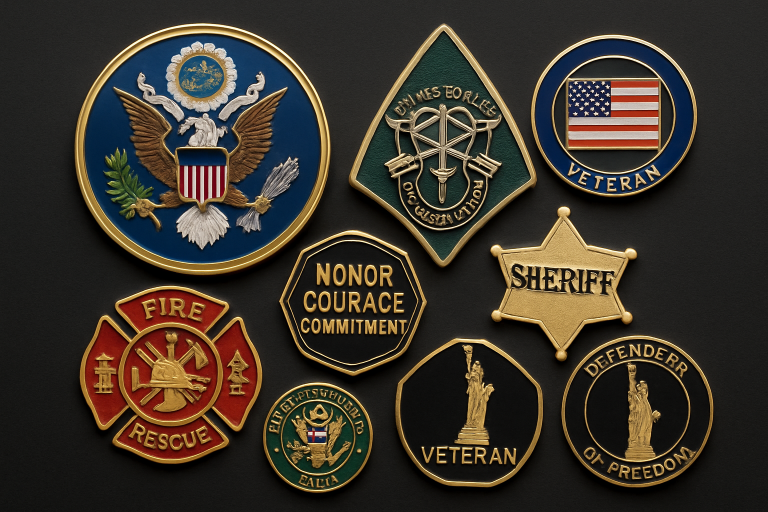
Custom challenge coins are steeped in meaning, connecting individuals and organizations through shared values and experiences. Far beyond simple metal tokens, these coins have become powerful symbols of unity, pride, and achievement in modern culture. From the military to first responders, and even within private organizations and clubs, custom challenge coins serve as storied artifacts with deep personal significance.
Today, these coins not only commemorate essential moments but also encapsulate the spirit of their holders, turning abstract values like honor and teamwork into something tangible. Whether crafted for a deployment, an organizational anniversary, or a community cause, each coin is a blend of artistry and tradition that binds people together, sometimes for a lifetime.
Many groups choose challenge coins to foster a sense of belonging and celebrate achievements that might otherwise go unnoticed. As they pass from one hand to another, these coins often deliver encouragement, silently conveying messages of trust and admiration. It’s no surprise that their popularity has exploded, expanding from strictly military origins into diverse arenas ranging from law enforcement to business and even charitable efforts.
Through innovative design, memorable shapes, and resonant symbolism, challenge coins have proven themselves to be more than mere keepsakes—they are powerful storytelling devices. This article explores how their design elements, evolving usage, and real-life stories all contribute to their timeless appeal.
Origins and Evolution
The roots of challenge coins stretch far into history, with early examples appearing in the Roman Empire, where soldiers were awarded specially minted coins for acts of valor. Over centuries, this tradition evolved into an admired ritual in the modern military, particularly in the U.S., where coins were used to boost morale and affirm unit pride. Carrying a challenge coin became a testament to belonging and served as a badge of honor within elite groups.
The custom spread rapidly during the 20th century, moving into police and fire departments, and later into corporate and nonprofit spheres. Today, both formal organizations and grassroots groups use challenge coins to recognize service, dedication, and acts of courage, securing their place in contemporary culture.
Design Elements and Symbolism
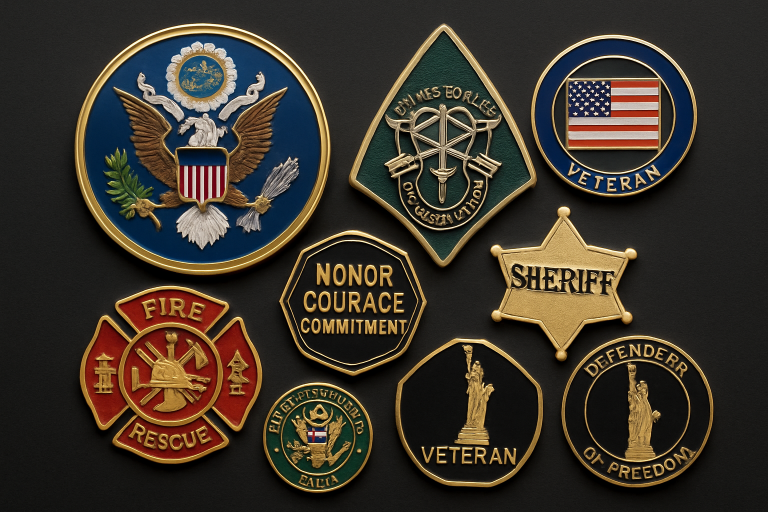
The true power of a challenge coin lies in its design, which often weaves together text, imagery, and symbolic color to tell a story in miniature. Units or organizations may choose specific elements—such as animals, mottos, or emblems—that convey their mission and values. For example, an Air Force squadron might select an eagle soaring over mountains as a symbol of strength and vigilance. At the same time, a fire department might use a Maltese cross to signify protection and bravery.
These thoughtful inclusions transform each coin into a timeless memento, a reminder of shared sacrifice or triumphant achievement. Personalization is also a growing trend, enabling coins to feature names, dates, or mission phrases. As a result, no two coins are exactly alike—each carries meaning for those who receive and carry it, marking milestones and capturing collective memory.
Custom Shapes and Their Meanings
While the classic circular challenge coin remains a timeless favorite, modern coin designers have embraced a wide variety of inventive shapes, each carrying distinct symbolism. Shield-shaped coins, for example, are particularly popular among law enforcement and military organizations, representing defense, protection, and honor. Technology companies may opt for angular or polygonal designs to convey innovation, precision, and forward-thinking ideals. At the same time, humanitarian or charitable groups might choose heart-shaped coins to emphasize compassion, service, and the human impact of their work.
These nontraditional shapes serve more than an aesthetic purpose—they amplify the narrative and values behind each coin. Star-shaped coins, for instance, are frequently reserved for recognition of excellence and are often presented to top performers during awards ceremonies. Even abstract or freeform designs can carry deep meaning, reflecting an organization’s creativity or a mission’s uniqueness. By thoughtfully integrating shape with symbolism, these coins become powerful storytelling tools that engage collectors and recipients alike, reinforcing community values and inspiring pride in membership or support.
Challenge Coins in Fundraising
Challenge coins have evolved from tokens of personal recognition to highly effective fundraising instruments, particularly during times of crisis or urgent need. Communities frequently rally around first responders—such as police, firefighters, and EMTs—by purchasing commemorative coins, with proceeds directed to the families of injured personnel or to the acquisition of critical equipment. This dual-purpose function allows donors to contribute meaningfully while receiving a tangible keepsake that represents solidarity and gratitude.
Beyond supporting immediate needs, these coins often carry lasting sentimental value. Many evolve into cherished collectibles or family heirlooms, serving as physical reminders of community support, resilience, and collective effort. Organizations also leverage these coins to strengthen donor engagement, creating a sense of belonging and recognition among contributors. By combining fundraising with meaningful symbolism, challenge coins uniquely bridge the gap between philanthropy, remembrance, and shared values.
Conclusion
Custom challenge coins transcend mere collectibles, serving as enduring symbols of shared experiences, accomplishments, and organizational unity. Thoughtful design, personalization, and symbolic elements allow them to capture the spirit of the people, missions, and communities they honor. Whether exchanged among team members, passed down as meaningful mementos, or sold to support charitable initiatives, challenge coins continue the age-old tradition of storytelling. They preserve legacies, commemorate milestones, and foster connections, ensuring that the values they embody live on in individual lives and throughout the broader community.
