
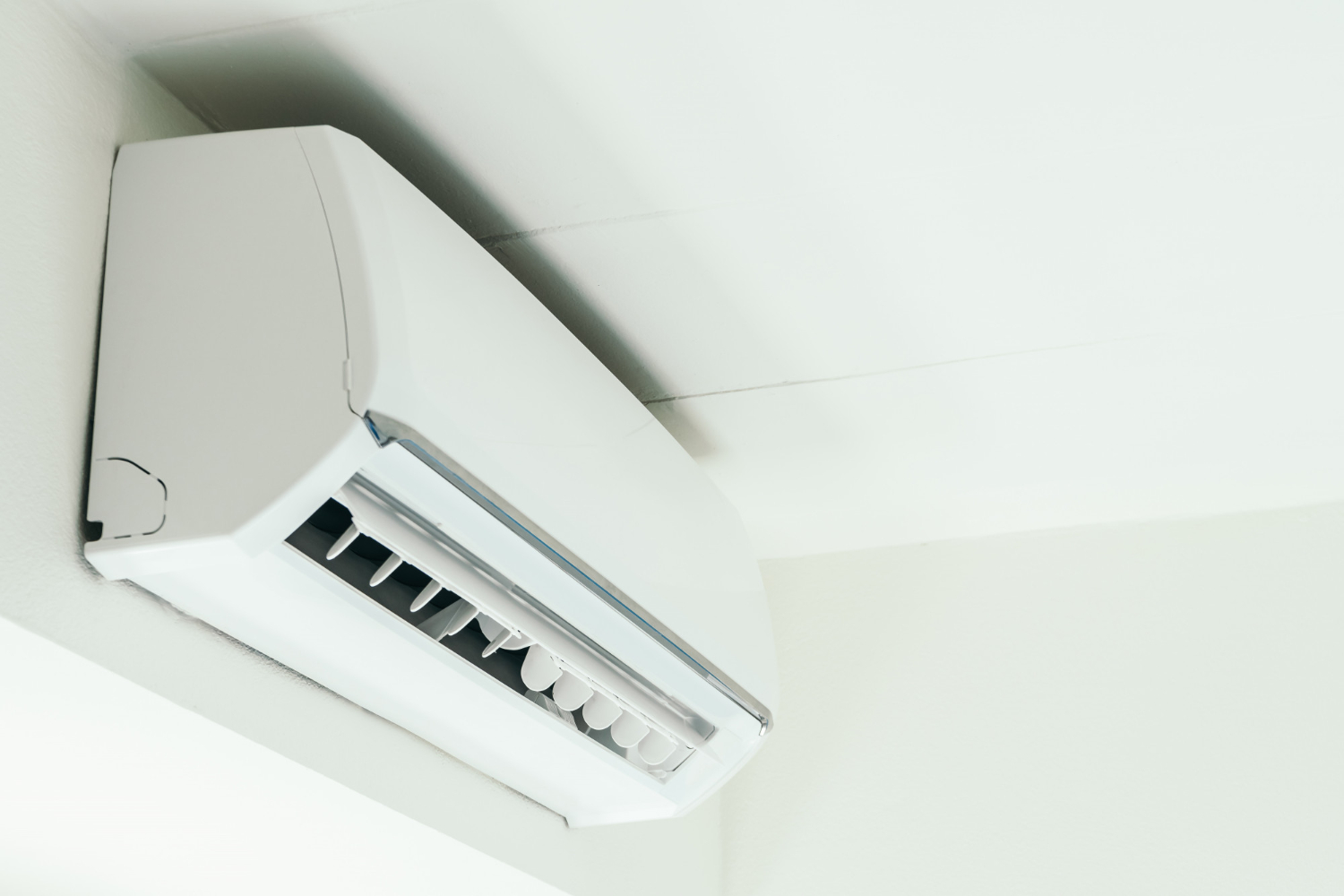
The majority of individuals do not consider their air conditioning unit before it becomes defective. At that time, the repair costs account for months, even years, of needless strain on parts that would have broken down even if they had been well maintained. A system that lasts 15 years and one that stops working after 8 usually has to do with how often it was maintained.
How Dust Quietly Destroys Efficiency
The concept behind all of this is physics that can be very easily understood. Your reverse cycle system transfers heat via the coils – in summer taking warmth out of the space, and in winter putting it in. When dust settles down on the coils, it acts as an insulator. A mere 1/16th of an inch layer can push system inefficiency up by 21%. That’s not a catastrophic failure you’d immediately realize. It’s a steady loss: higher power bills, more extended cycles, and a compressor laboring more than it was designed to.
The U.S. Department of Energy patches the filter side of the argument pretty straightforwardly: “Replacing a dirty, clogged filter with a clean one can lower energy consumption by 5% to 15%.” That’s not a small change. Over a whole cooling and heating season, it’s a noticeable amount.
What’s hard is what comes next to a dirty filter in the sequence. Restricted airflow means less amount of air in cubic meters passing through the unit per second. The evaporator coil goes below zero, frosting up. The compressor – the heart of every reverse cycle unit – needs to work harder and longer to compensate. Compressor failure is almost always slow. It is the final issue on a long list that began with a dusty filter.
Why Reverse Cycle Systems Need Twice The Attention
A cooling device operates during the hot season while a reverse cycle system works in two distinct seasons by reversing the refrigerant cycles to produce heat during the cold months and cool air during the hot months. The mechanical requirement is doubled, as well as the wearing potential. Therefore, it is suggested that you have your systems checked before every peaking season.
Low refrigerant charges have a more severe impact here as well. In a cooling-only system, low refrigerant just decreases the system’s cooling capacity, but in a reverse cycle system, low refrigerant on either the heating or cooling refrigerant cycle causes the whole system to heat up as both cycles share the same compressor, meaning it’s running inefficiently for both seasons.
Furthermore, the refrigerant is designed to cool the compressor and if there is an insufficient charge, the compressor overheats which can end up in its complete destruction (and potential burnouts), adding to your repair costs.
Finally, people rarely check their thermostats for accuracy or even notice when they are not functioning properly, but a poorly calibrated thermostat can cause short cycling of the entire system.
Surface Cleaning Versus What Actually Needs Doing
There’s a difference between wiping down the front panel and actually clearing the system. Most homeowners can handle visible filter maintenance, but the filter cleaning reverse cycle process for removing fine particulate matter embedded in the mesh requires more than a standard vacuum pass. Fine particles pack into filter media in ways that restrict airflow without being visibly obvious, and pulling them out requires the right tools and technique.
Further in, the condensate drain and tray are a separate problem. That environment is permanently damp, and microbial biofilms – mold, bacteria – establish themselves there without any visible warning. Standard cleaning won’t clear a developed biofilm. Professional grade antimicrobial solutions are needed, and skipping this step means those contaminants get cycled through your indoor air every time the system runs. IAQ doesn’t improve just because the filter looks clean if the drainage system is contaminated.
Maintenance As Asset Management
A new reverse cycle system costs over $5,000 installed. Routine servicing costs a fraction of that each year. The money holds up: you lose the same 5-7 years of expected use from a system that’s choked on its own dust and hair for a half-decade and never worked quite so efficiently to start with. Your replacement compressor’s warranty will no longer save you if you’ve already voided it due to shoddy maintenance.
It would have cost less simply to throw a couple of hundred dollars at the thing every year than to multiply that figure by 30 to cover the remaining 12 years left in the functional life of a properly-serviced unit. A washed air filter here, a refrigerant top-up there. It’s called piece of mind because it’s relatively cheap.
Serviced systems also tend to keep that showroom-rated level of efficiency. As the unit degrades, the SEER or EER effectively falls – more units of power are drawn to produce a unit of cooling. It doesn’t read this on the remote. It just keeps the house that little bit warmer or that little bit cooler for a little bit more electricity than it did five, six, seven years ago.