From weekday traffic on Central Expressway to hauling supplies across North Texas, a pickup has to do more than look good in a seller’s driveway. Shoppers comparing used trucks Dallas, Texas listings should evaluate each vehicle as a work tool, a commuter, and a long-term expense before making an offer. Dallas heat, stop-and-go driving, long highway runs, job-site use, and frequent towing can all expose weak points in an older truck. A careful inspection helps buyers look beyond shiny paint, oversized wheels, and a low odometer reading to determine whether a truck suits their real needs in the Dallas area.
Why Used Trucks Require a Different Inspection
Pickups are often used to tow trailers, carry equipment, navigate rough terrain, or support daily work. Those tasks can put added strain on brakes, suspension, cooling systems, transmissions, differentials, and hitches. Mileage matters, but maintenance matters just as much. A well-serviced truck with higher mileage may be a better choice than a lower-mileage truck that has been neglected or worked hard without records.
Step 1: Set a Realistic Dallas Truck Budget
Start with the full ownership cost, not simply the advertised price. Include sales tax, title and registration costs, insurance, financing, fuel, routine service, tires, and likely repairs. Keep extra room in the budget for older trucks, diesel systems, or vehicles with unclear maintenance histories. The cheapest truck can become the most expensive option if it immediately needs tires, brakes, suspension work, or major drivetrain repairs.
Step 2: Match the Truck to Its Main Job
Decide how the truck will actually be used around Dallas and beyond. A half-ton pickup may be suitable for commuting, home projects, and occasional light towing. Buyers who routinely tow a camper, work trailer, boat, or heavy equipment should verify the truck’s specific towing and payload ratings rather than relying on the badge alone. Consider whether four-wheel drive is useful for your work sites, hunting property, or travel plans, since it can add complexity and maintenance costs.
Step 3: Verify the VIN, Title, and History
Confirm that the VIN on the dashboard, driver-side door area, and paperwork match. Review title status and ask about accidents, flood damage, theft recovery, fleet service, rental use, or commercial operation. A clean title does not guarantee that a truck has never been damaged or poorly repaired. Before buying, use the VIN to check for open safety recalls that may need to be addressed by the manufacturer or a dealership.
Step 4: Inspect the Frame and Undercarriage
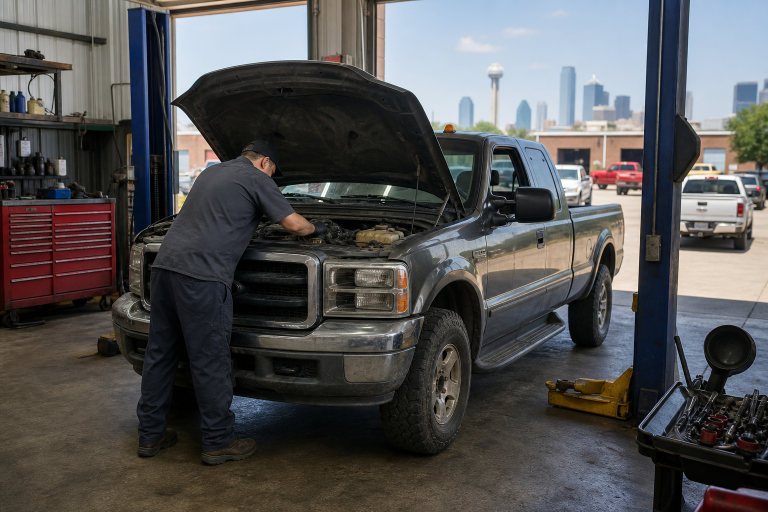
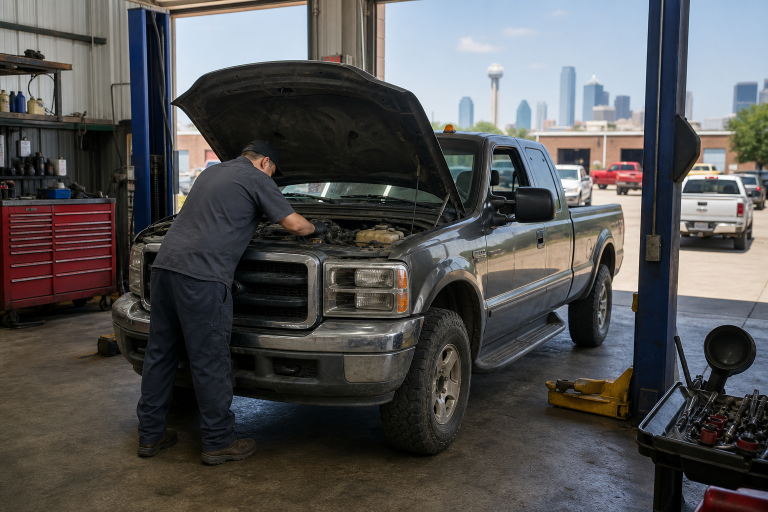
Get underneath the truck or have a mechanic place it on a lift. Inspect frame rails, crossmembers, cab mounts, suspension mounting points, and the bed supports. Light surface rust is different from deep scaling, holes, cracks, bent metal, or a fresh coating that appears to hide a repair. Watch for uneven welds, collision damage, and signs that the frame has been straightened. Serious structural corrosion or damage is often a reason to walk away.
Step 5: Examine the Engine and Cooling System
Whenever possible, ask to start the truck cold. Listen for knocking, persistent ticking, rattling, belt noise, or an unstable idle. Check fluid levels and look for leaks in oil, coolant, fuel, or power steering. During the drive, monitor warning lights and engine temperature. Blue, white, or black exhaust smoke can signal a concern, but no single symptom should be treated as a final diagnosis without professional evaluation.
Step 6: Test the Transmission and Drivetrain
Shift into Drive and Reverse, noting any hesitation, harsh engagement, shudder, slipping, or unusual changes in engine speed. Test the truck at city speed, highway speed, and on an incline when practical. Listen for hums, clunks, vibrations, or whines that change with acceleration, turning, or deceleration. Also, inspect for leaks around the transmission, transfer case, driveshaft, axles, and differentials.
Step 7: Confirm Four-Wheel-Drive Operation
If the truck has four-wheel drive, test each available mode according to the owner’s manual. Delayed engagement, grinding, binding, warning lights, or clicking noises may indicate trouble with the transfer case, front differential, axles, hubs, or related electronics. Even a system that was rarely used can develop faults. For buyers who stay on paved Dallas roads, a two-wheel-drive truck may be the simpler fit.
Step 8: Look for Towing, Hauling, and Modification Wear
Inspect the hitch receiver, trailer wiring, brake controller, rear suspension, bed floor, tie-down points, and tailgate. Heavy use is not automatically a problem when service records are strong, but sagging springs, worn hitch hardware, damaged wiring, or a heavily scarred bed deserve questions. Review lift kits, leveling kits, tuners, exhaust changes, wheels, tires, and added lighting closely. Poor installation can create alignment problems, electrical faults, and premature component wear.
Step 9: Review Tires, Brakes, Steering, and Suspension
Check that tires match, have adequate tread, and wear evenly across the tread surface. Uneven wear may indicate alignment, steering, or suspension trouble. During the test drive, note pulling, steering play, brake vibration, clunks, wheel-bearing noise, or excessive body movement. Inspect visible brake components, shocks, leaf springs, ball joints, and tie rods. A strong-running engine does not offset unsafe tires or worn steering parts.
Step 10: Understand Texas Registration Requirements
As of 2026, noncommercial vehicles in Texas no longer need a safety inspection before registration, a change that took effect on January 1, 2025. However, Dallas County is among the Texas counties where noncommercial vehicles must still pass emissions testing to remain registered. Before completing a deal, review the current registration requirements for Dallas County vehicles, especially when buying from a private seller or considering a truck for commercial use.
Step 11: Take a Purposeful Test Drive
- Start with a cold engine when possible.
- Test acceleration, braking, steering response, and lane changes.
- Drive on smooth pavement and rougher surfaces.
- Use the air conditioning, heat, windows, locks, cameras, and displays.
- Listen for noises that change with speed, braking, turning, or load.
- Recheck beneath the truck for fresh leaks after the drive.
Step 12: Hire an Independent Inspector and Make a Fair Offer
An independent mechanic is especially valuable for expensive, modified, high-mileage, diesel, or heavily used trucks. Request a written report with photos, repair priorities, and estimated costs. Separate urgent safety items from normal wear, then use realistic repair estimates when negotiating. If the seller refuses a reasonable inspection or the total cost exceeds your budget, be ready to walk away.
Final Dallas Used Truck Checklist
- Set a full first-year budget and reserve for repairs.
- Match the truck’s capacity to your intended work and towing needs.
- Verify the VIN, title, history, and recall status.
- Inspect the frame, undercarriage, engine, cooling system, and drivetrain.
- Test four-wheel drive, brakes, steering, suspension, electronics, and air conditioning.
- Review towing equipment, tires, modifications, and Dallas County emissions requirements.
- Schedule an independent inspection before setting a firm maximum offer.
Buying a used truck in Dallas, Texas, calls for patience and a repeatable process. When the truck’s condition, history, intended use, and total cost all make sense together, buyers can move forward with greater confidence and fewer unpleasant surprises after the keys change hands.
Conclusion
Buying a used truck in Dallas requires more than comparing prices, mileage, and exterior appearance. Buyers should evaluate the vehicle’s history, title status, maintenance records, recalls, frame condition, drivetrain, towing equipment, tires, brakes, and suspension before making a decision. The truck should also match the buyer’s actual needs for commuting, hauling, towing, and other driving conditions in North Texas. In addition to the purchase price, shoppers should account for financing, insurance, fuel, maintenance, repairs, registration, and applicable Dallas County emissions requirements. A purposeful test drive can identify potential concerns, but an independent pre-purchase inspection can provide a more detailed assessment of mechanical and structural condition. Taking time to verify these details and obtain written information about costs and repairs can help Dallas buyers make a more informed purchase and reduce the risk of unexpected expenses after the sale.