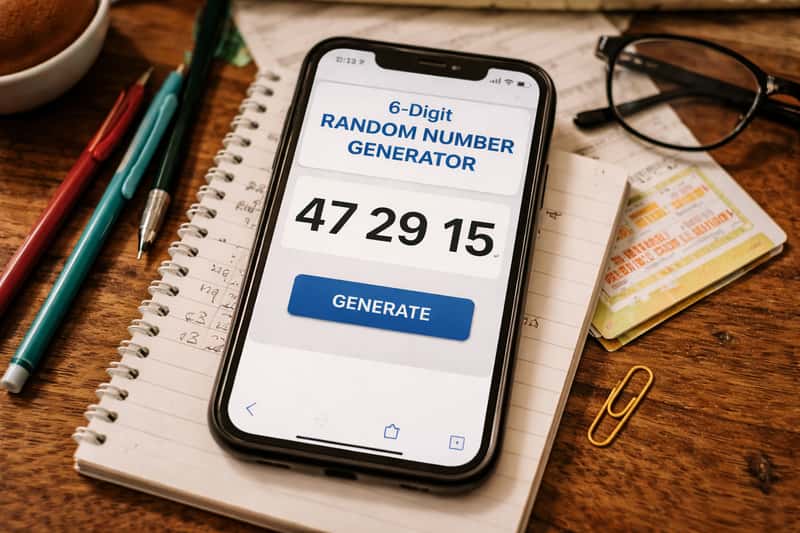
Picture your lotto line sitting half-filled because you’ve already used three birthdays and can’t think of a number above 31. Or it’s game night, six of you are arguing over who deals first, and nobody wants to be the one to decide. A 6 number random generator settles both in one click: set a range, hit generate, and walk away with a fair, evenly spread set like 7, 23, 31, 44, 8, 19 before anyone can complain. Your brain is bad at random. The tool isn’t.
How to Generate Six Random Numbers in Seconds
Open the generator, set the quantity to six, hit go. That’s the whole move. You walk away with a usable set before you read another word.
If you want a result this second, here’s the order that works every time: choose how many numbers (six), choose your range (more on that next), then decide if duplicates are allowed. Click generate. Done.
No account, no setup, no math. The tool runs a fast algorithm, spits out six values inside your bounds, and you copy them wherever they need to go. Everything below this is just helping you point that one click at the right job.
Setting Your Range Before You Hit Generate
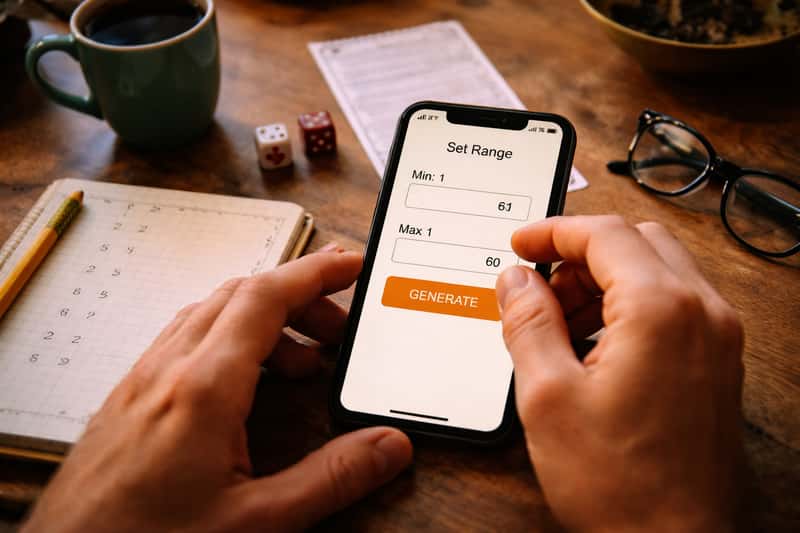
The range is the one setting that actually changes your output, so set it on purpose instead of accepting whatever default loads. A range of 1 to 6 is a dice debate. A range of 1 to 49 is a lottery line. Same six numbers, completely different use.
Here’s the quick map of common ranges and what each is built for.
1 to 49 for Lottery-Style Picks
Most six-ball lotteries draw from a pool around 1 to 49 or 1 to 59. Set those exact bounds and your six numbers come out ticket-ready, no trimming or re-rolling. Match your local game’s pool before you generate, because a 1 to 100 set won’t fit a 1 to 49 ticket.
0 to 9 for PIN and Digit Codes
When you need six single digits, like a PIN or a verification-style code, set each slot to 0 through 9. Repeats are fine here. Real PINs repeat all the time, so leave duplicates on and let a 4 land twice.
1 to 100 for General Picks
For raffles, draws, or any snap decision, 1 to 100 gives you room to breathe. Widen it for a bigger entry list, narrow it for a small one. The range should roughly match how many things you’re choosing between.
Six Random Numbers for Lottery and Raffle Picks
This is the reason most people land here. The setup is the same whether you’re filling a ticket or pulling a winner: match the range to the game, generate six, walk away.
Quick Picks for Common Lotto Formats
Set the range to your game (1 to 49, 1 to 59, whatever your ticket uses), turn on no-duplicates, and generate. You get one clean line with no birthday clustering. This won’t improve your odds, nothing does, but it does give you an evenly spread line instead of six numbers all under 31 because you used calendar dates.
Drawing a Raffle Winner Fairly
Number your entries 1 through however many you sold, set the range to match that count, force unique values, and let the generator pull your winners. No reaching into a hat, no “the host’s cousin won again” arguments. The number that comes up is the number, and everyone watched it happen.
Six Random Digits for PINs and Codes
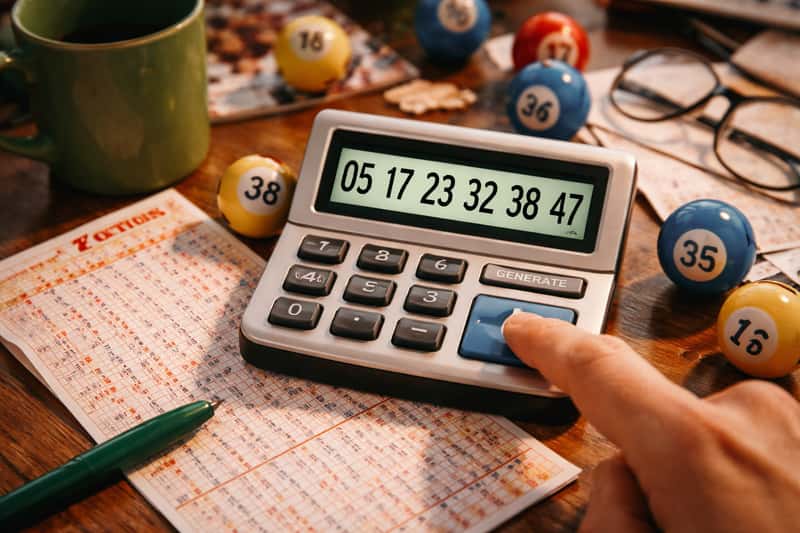
A six-digit code is a five-second job. Set 0 to 9, six slots, duplicates allowed, generate. For a game lobby code, a temporary lock combo, or any low-stakes PIN nobody’s guarding money behind, a standard generator is perfect. Fast, even, good enough. (One caveat: for actual passwords or banking PINs, skip the casual tool and use a security-grade generator, because those need a stronger kind of randomness than a basic picker provides.)
Six Numbers for Team Drafts and Game Night
This is the fun one. Use the generator to set draft order, pick who goes first, or end a debate nobody wants to lose by hand.
Assigning Draft Order for Six Players
Set the range to 1 through 6, force unique values, generate. You’ve got a fair pick order in one click and nobody can claim you rigged it.
Already herding six people into a draft? Give the crew a name worth keeping. Steal one from our group names for 6 people list while the order’s still loading.
Random Picks for Game Night Decisions
Who buys snacks, who picks the movie, who deals first. Assign everyone a number, let the generator choose, and the dice get the blame instead of you. Arguments over before they start.
Six Numbers for Contest Draws
Running a giveaway on Instagram or in the group chat? Same playbook as the raffle. List your entrants, number them 1 through your total, set the range to match, force unique values, and generate six winners (or one, then five backups for the no-shows). Screenshot the result so nobody accuses you of picking your best friend. The tool decides, you just announce.
How to Get Six Unique Numbers Without Duplicates
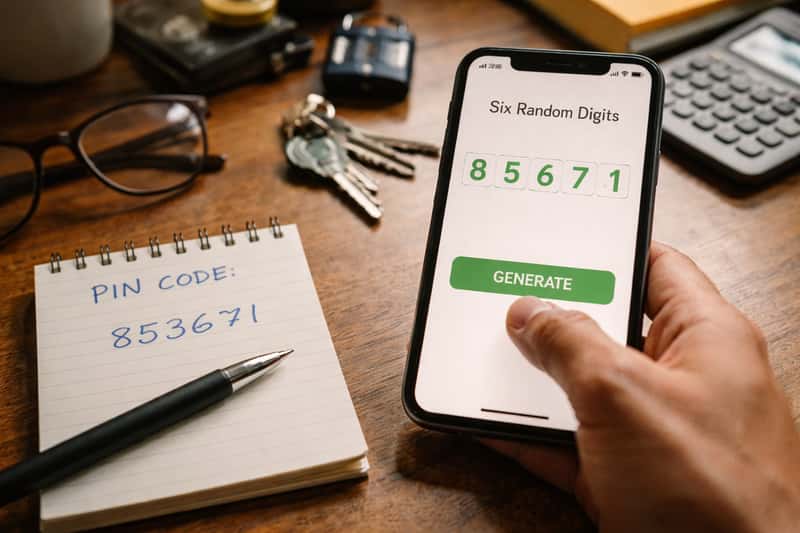
“How do I get six numbers with no repeats?” is one of the most-searched questions in this whole cluster, and the answer is one checkbox.
Turning On the No-Duplicates Setting
Most good generators have a unique-values or “no duplicates” toggle. Flip it on whenever every number has to be different: lottery balls, draft slots, raffle entries. A common bug in homemade tools is forgetting to strip duplicates when you wanted unique numbers, which quietly changes the odds, so let a tool that handles it do the work.
When Duplicates Are Actually Fine
For PINs, dice rolls, or any repeated pick, duplicates are normal and expected. Six dice can absolutely land three 4s. Leave the toggle off and let numbers repeat, because forcing uniqueness there would make the result less random, not more.
| Use case | Range | Duplicates |
|---|---|---|
| Lottery line | 1-49 or 1-59 | No |
| PIN or digit code | 0-9 | Yes |
| Raffle draw | 1 to entry count | No |
| Draft order (6 players) | 1-6 | No |
| Dice-style rolls | 1-6 | Yes |
| General decision | 1-100 | Your call |
Are These Numbers Actually Random?
Fair question, and the honest answer is “random enough, and probably more random than you are.”
Pseudo-Random vs Truly Random in Plain English
Most web tools use pseudo-random generators: fast deterministic algorithms that produce numbers which look random and pass everyday fairness checks (Pseudorandom number generator, Wikipedia). Truly random sources pull from physical noise instead, like atmospheric static or thermal noise, and they mostly matter for security, not your game night. Random.org notes that many online generators aren’t truly random at all, just statistically even, which is exactly what you need for picks and draws.
Why You Are Worse at Random Than the Tool
Psychologist Raymond Nickerson found people “depart from randomness in systematic ways,” avoiding repeats and obvious patterns when asked to invent random sequences (Nickerson, Psychological Review). That’s why lottery picks skew toward birthdays and low numbers. The generator has no favorites, so your six numbers come out evenly spread across the whole range instead of bunched under 31.
Your Pick, Sorted
The whole point of a 6 number random generator is that the decision stops being your problem. Set the range, choose whether repeats are allowed, click once, and trust that the spread is fairer than anything your gut would hand you. Then go name the crew, draw the winner, or finally settle who deals first.
FAQs about 6 number random generator
How do I generate 6 random numbers between 1 and 49?
Set the generator’s range to a minimum of 1 and maximum of 49, choose six numbers, turn on no-duplicates, and click generate. You get one lottery-ready line.
Are online random number generators truly random?
Most are pseudo-random, meaning an algorithm produces numbers that look and behave randomly but aren’t drawn from physical noise. That’s perfectly fair for games, picks, and draws.
Is a casual generator safe for passwords or banking PINs?
No. For anything guarding real money or accounts, use a security-grade generator built for that job. A basic web picker isn’t.
How many random numbers should I generate for a six-person draft?
Exactly six, with the range set to 1 through 6 and unique values forced on. That gives every player a distinct, fair draft position in one click.
Why are my own number picks worse than the generator’s?
People instinctively avoid repeats and lean on birthdays and patterns, which makes manual picks predictable. A generator spreads numbers evenly across the full range with no bias.
Can I generate six random numbers multiple times and keep the results?
Yes. Most web tools let you save or re-roll on demand, so generate as many sets as you want and copy the ones you’re keeping before the next click overwrites them.